
Assalamualaikum and have a nice day guys. :)
Let's continue with the next entry on Saudi Arabia.
Diet
The Saudi diet varies by lifestyle. A farmer consumes different foods than a nomad, and a city dweller may eat traditional Saudi cuisine as well as Western food. A staple of the Saudi diet, regardless of lifestyle, is dates. They are eaten either raw or cooked, and come in red and black varieties. The diet of a farmer is based on grains, such as millet, rice, barley and wheat. Fruit and dates are eaten regularly. Lamb is the most commonly consumed meat, occasionally supplemented by goat and camel meat. The nomadic diet depends on milk products from goats, sheep or camels. Milk is consumed fresh or made into yogurt and cheese. Meat is only eaten on special occasions or when wild game is available. When nomads visit a town they purchase fruits and vegetables to eat. The main meal for nomads is at the end of the day, accompanied by coffee and tea. Saudis who live in towns and cities have a variety of foods available to them. A typical Saudi meal consists of rice with spiced chicken or lamb, or kebabs, with dates, and dairy products. The meal is accompanied by flatbread. Commonly prepared dishes are tabbouleh, a salad made with bulgar (cracked) wheat and mint; hummus, a dip made from chick peas; mutabak, pastry turnovers stuffed with cheese, banana or meat; salig, lamb cooked in a mild spiced sauce and served with rice; mihammar, stuffed lamb in a yogurt sauce; kabbza, lamb or chicken with onion, tomato, cucumber and grated carrot; thurid, chicken in a cream sauce served on leaves of dough; sambustik, triangles of dough filled with spicy meat and onion and then fried in oil.
Coffee is offered at every social gathering, business meeting and meal. To accept less than three cups of coffee is considered impolite. To indicate that one is done, wobble the cup before giving it back to the host. Food and beverages cannot be consumed in public during the holy month of Ramadan, even by non-Muslims.
The South Asian diet includes biryanis (rice with saffron, meat, fish, or chicken), dhal (a lentilbased soup), and several types of bread. Cows are sacred to Hindus; chicken and lamb are the most commonly consumed meats. The Bangladeshi and Sri Lankan diets contain more rice and fish than the Indian and Pakistani diets.
Etiquette and Customs in Saudi
Meeting Etiquette
- Men shake hands. Good friends may greet each other with a handshake and a kiss on each cheek.
- Women generally hug and kiss close friends.
- Men and women would not greet each other in public I from outside the family.
- When Saudis greet each other they take their time and converse about general things.
Gift Giving Etiquette
- Gifts are not the norm as in many other countries.
- If you are invited to a Saudi's house bring something small as a thank you.
- Flowers do not make good gifts from a man, although a woman could give them to her hostess.
- Never give alcohol unless you are positive they partake.
- Gifts are not opened when received.
Dining Etiquette
- Saudis socialize primarily in restaurants and international hotels when entertaining expatriates whom they do not know well. After some time you will be invited to the home.
- Entertainment will generally be same-sex only. If both sexes are included, they will be in separate rooms.
- If you are invited to a Saudi's house, you would usually remove your shoes.
- Dress conservatively.
- Try to arrive at the invited time. Punctuality is appreciated but not crucial.
- Show respect for the elders by greeting them first.
- Accept the offer of Arabian coffee and dates even if you do not normally drink coffee.
- If you are invited for a meal, understand that there will be a great deal of socializing and small talk before the meal is served.
Table manner
- If the meal is on the floor, sit cross-legged or kneel on one knee.
- Eat only with the right hand as the left is considered unclean.
- Try a bit of everything that is served.
- Meals are generally served family-style.
- Honoured guests are often offered the most prized pieces such as a sheep's head so be prepared!
- There is often more food than you can eat. Part of Saudi hospitality and generosity is to shower guests with abundance.
- There is little conversation during meals so that diners may relish the food.
(credits to https://lostinriyadh.wordpress.com/ )
Thursday, April 14, 2016

Tuesday, April 5, 2016
Multicultural Counseling Competencies
Assalamualaikum everyone. :)
In this entry we are going to share on multicultural counseling competencies, an information that is inportant for future counselors (that's us *wink*) and for you guys too.
DEFINING MULTICULTURAL COUNSELING
It may sound simplistic, but multicultural counseling is defined as what occurs when the professional counselor works with a client from a different cultural group and how that might affect interactions that take place within the counseling relationship. This definition is expanded to include dissimilarities in religion and spirituality, sexual orientation, gender, age and maturity, socioeconomic class, family history, and even geographic location. The first step in effective multicultural counseling is to identify and acknowledge these differences between the counselor and client.
IDENTIFYING CULTURAL DIFFERENCES
One of the first steps in working with clients is to discuss what brings a person into counseling and to identify the presenting problem. The typical Western style of finding answers through a direct approach is not compatible with many cultures. This technique includes use of body language, eye contact, and using open-ended questions. Asian Americans, for instance, typically experience this method as impolite. Native Americans also feel this directness to be too invasive. Recognizing and being sensitive to cultural differences is essential for establishing the trust necessary to conduct effective counseling sessions.
UNDERSTANDING & ADDRESSING ISSUES IN MULTICULTURAL COUNSELING
One of the most effective tools counselors can utilize to engage clients from other cultures is to openly acknowledge any differences. The key is doing it in such a way that does not undermine the client’s belief that you will be able to offer professional help and potential solutions. Part of establishing rapport with multicultural clients is expressing a willingness to learn more about, and showing respect for, their worldview, belief systems, and means of problem-solving. Learning about and addressing the client’s realities will allow you to create culturally-sensitive interventions.
THE ROLE OF SELF IN MULTICULTURAL COUNSELING
Self-reflection is vital to becoming a culturally-competent counselor. Start by clearly identifying your own worldview and personal beliefs about those who are different from you. This exercise will assist you in uncovering your own prejudices, feelings, and stereotypical ideas about clients from other cultures. Being open-minded and willing to educate yourself about culturally different groups is a productive way of moving forward toward your goal of working effectively with them in counseling. Becoming self-aware is an ongoing practice, and allowing new information to play a part in shaping your professional identity is a valuable tool.
ONGOING EDUCATION REQUIRED IN MULTICULTURAL COUNSELING
It’s important to understand that professional counselors never master the ability to understand every unique cultural difference; this is a continual state of learning. Your knowledge base will grow as you work with a greater number of diverse clients, but the learning doesn’t stop there. Working in this area of professional counseling will continually provide you with opportunities to gain new insights and skills with each new client.
(credits to http://www.delval.edu/blog/five-important-aspects-of-multicultural-counseling-competencies)
Thanks for reading guys. See u in the next entry. :)
In this entry we are going to share on multicultural counseling competencies, an information that is inportant for future counselors (that's us *wink*) and for you guys too.
DEFINING MULTICULTURAL COUNSELING
It may sound simplistic, but multicultural counseling is defined as what occurs when the professional counselor works with a client from a different cultural group and how that might affect interactions that take place within the counseling relationship. This definition is expanded to include dissimilarities in religion and spirituality, sexual orientation, gender, age and maturity, socioeconomic class, family history, and even geographic location. The first step in effective multicultural counseling is to identify and acknowledge these differences between the counselor and client.
IDENTIFYING CULTURAL DIFFERENCES
One of the first steps in working with clients is to discuss what brings a person into counseling and to identify the presenting problem. The typical Western style of finding answers through a direct approach is not compatible with many cultures. This technique includes use of body language, eye contact, and using open-ended questions. Asian Americans, for instance, typically experience this method as impolite. Native Americans also feel this directness to be too invasive. Recognizing and being sensitive to cultural differences is essential for establishing the trust necessary to conduct effective counseling sessions.
UNDERSTANDING & ADDRESSING ISSUES IN MULTICULTURAL COUNSELING
One of the most effective tools counselors can utilize to engage clients from other cultures is to openly acknowledge any differences. The key is doing it in such a way that does not undermine the client’s belief that you will be able to offer professional help and potential solutions. Part of establishing rapport with multicultural clients is expressing a willingness to learn more about, and showing respect for, their worldview, belief systems, and means of problem-solving. Learning about and addressing the client’s realities will allow you to create culturally-sensitive interventions.
THE ROLE OF SELF IN MULTICULTURAL COUNSELING
Self-reflection is vital to becoming a culturally-competent counselor. Start by clearly identifying your own worldview and personal beliefs about those who are different from you. This exercise will assist you in uncovering your own prejudices, feelings, and stereotypical ideas about clients from other cultures. Being open-minded and willing to educate yourself about culturally different groups is a productive way of moving forward toward your goal of working effectively with them in counseling. Becoming self-aware is an ongoing practice, and allowing new information to play a part in shaping your professional identity is a valuable tool.
ONGOING EDUCATION REQUIRED IN MULTICULTURAL COUNSELING
It’s important to understand that professional counselors never master the ability to understand every unique cultural difference; this is a continual state of learning. Your knowledge base will grow as you work with a greater number of diverse clients, but the learning doesn’t stop there. Working in this area of professional counseling will continually provide you with opportunities to gain new insights and skills with each new client.
Thanks for reading guys. See u in the next entry. :)
Friday, April 1, 2016
Myanmar @ Burma part 1
Assalamualaikum and welcome back guys! :)
So hows your day awesome people? Hope all of you are having a good day and ready to read another entry from thisThree Musketeers' blog. ;)
Okay, today we are going to share on Myanmar's story. Want to know more? Keep on reading guys *wink*.
History of Myanmar
Myanmar has a long and complex history. Many peoples have lived in the region and the history began. The first identifiable civilization is that of the Mon. The Mon probably began migrating into the area in about 300 BC, and their first kingdom Suwarnabhumi, was founded around the port of Thaton in about 300 BC. The Pyu arrived in Myanmar in the 7th century and established city kingdoms at Binnaka, Mongamo, Sri Ksetra, and Halingyi. During this period, Myanmar was part of an overland trade route from China to India. By 849, the Burmans had founded a powerful kingdom centered on the city of Bagan and filled the void left by the Pyu. The kingdom grew in relative isolation until the reign of Anawrahta (1044 - 77) who successfully unified all of Myanmar by defeating the Mon city of Thaton in 1057.
After the collapse of Bagan authority, Myanmar was divided once again. The Burmans had re-established themselves at the city of Ava by 1364, where Bagan culture was revived and a great age of Burmese literature ensued. The kingdom lacked easily defendable borders, however, and was overrun by the Shan in 1527. Surviors of the destruction of Inwa eventually established a new kingdom centered on Taungoo in 1531 led by Tabinshwehti (reigned 1531-50), who once again unified most of Myanmar. A popular Burmese leader named Alaungpaya drove the Bago forces out of northern Myanmar by 1753, and by 1759 he had once again conquered Pegu and southern Myanmar while also regaining control of Manipur. He established his capital at Rangoon, now known as Yangon.
Myanmar was known to the West ever since western explorers had heard of it. Marko Polo was the earliest known westerner who discovered Myanmar and introduced to the West. (credits to http://www.myanmars.net/myanmar-history/)
Some facts on Myanmar
Official name: Pyihtaungsu Thamada Myanmar Naingngandaw (Republic of the Union of Myanmar)
Form of government: Constitutional republic with two legislative houses (House of Nationalities [2243]; House of Representatives [4403])
Head of state and government: President: Htin Kyaw, assisted by Vice Presidents: Myint Swe and Henry Van Thio
Capital: Nay Pyi Taw (Naypyidaw)
Official language: Myanmar (Burmese)
Official religion: None
Monetary unit: Myanmar kyat (K)
Population: (2015 est.) 52,280,000
Total area (sq mi): 261,228
Total area (sq km): 676,577
Urban-rural population Urban: (2011) 32.6%
Rural: (2011) 67.4%
Life expectancy at birth: Male: (2012) 62.9 years
Female: (2012) 67.7 years
Literacy: (percentage of population age 15 and over literate) Male: (2008) 94.7%
Female: (2008) 91.9%
GNI per capita (U.S.$): (2009) 380
(taken from http://global.britannica.com/place/Myanmar#toc52565)
The Map of Myanmar

That's all we have for this entry guys.. wait till our next update. XOXO :)
So hows your day awesome people? Hope all of you are having a good day and ready to read another entry from this
Okay, today we are going to share on Myanmar's story. Want to know more? Keep on reading guys *wink*.
History of Myanmar
Myanmar has a long and complex history. Many peoples have lived in the region and the history began. The first identifiable civilization is that of the Mon. The Mon probably began migrating into the area in about 300 BC, and their first kingdom Suwarnabhumi, was founded around the port of Thaton in about 300 BC. The Pyu arrived in Myanmar in the 7th century and established city kingdoms at Binnaka, Mongamo, Sri Ksetra, and Halingyi. During this period, Myanmar was part of an overland trade route from China to India. By 849, the Burmans had founded a powerful kingdom centered on the city of Bagan and filled the void left by the Pyu. The kingdom grew in relative isolation until the reign of Anawrahta (1044 - 77) who successfully unified all of Myanmar by defeating the Mon city of Thaton in 1057.
After the collapse of Bagan authority, Myanmar was divided once again. The Burmans had re-established themselves at the city of Ava by 1364, where Bagan culture was revived and a great age of Burmese literature ensued. The kingdom lacked easily defendable borders, however, and was overrun by the Shan in 1527. Surviors of the destruction of Inwa eventually established a new kingdom centered on Taungoo in 1531 led by Tabinshwehti (reigned 1531-50), who once again unified most of Myanmar. A popular Burmese leader named Alaungpaya drove the Bago forces out of northern Myanmar by 1753, and by 1759 he had once again conquered Pegu and southern Myanmar while also regaining control of Manipur. He established his capital at Rangoon, now known as Yangon.
Myanmar was known to the West ever since western explorers had heard of it. Marko Polo was the earliest known westerner who discovered Myanmar and introduced to the West. (credits to http://www.myanmars.net/myanmar-history/)
Some facts on Myanmar
Official name: Pyihtaungsu Thamada Myanmar Naingngandaw (Republic of the Union of Myanmar)
Form of government: Constitutional republic with two legislative houses (House of Nationalities [2243]; House of Representatives [4403])
Head of state and government: President: Htin Kyaw, assisted by Vice Presidents: Myint Swe and Henry Van Thio
Capital: Nay Pyi Taw (Naypyidaw)
Official language: Myanmar (Burmese)
Official religion: None
Monetary unit: Myanmar kyat (K)
Population: (2015 est.) 52,280,000
Total area (sq mi): 261,228
Total area (sq km): 676,577
Urban-rural population Urban: (2011) 32.6%
Rural: (2011) 67.4%
Life expectancy at birth: Male: (2012) 62.9 years
Female: (2012) 67.7 years
Literacy: (percentage of population age 15 and over literate) Male: (2008) 94.7%
Female: (2008) 91.9%
GNI per capita (U.S.$): (2009) 380
(taken from http://global.britannica.com/place/Myanmar#toc52565)
The Map of Myanmar

That's all we have for this entry guys.. wait till our next update. XOXO :)
Tuesday, March 29, 2016
Peranakan @ Baba Nyonya: 2
Assalamualaikum and hi awesome people ;)
so let us continue on the Peranakans. Previous entry was on the history right? so in this entry we wanna focus on the dressing of the Baba Nyonya.
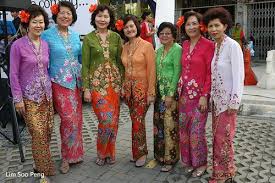
whenever we talks about Baba and Nyonya, one thing that will come out is their dressing which is 'kebaya'. Nyonya Kebaya is a unique traditional ethnic clothes worn by the Straits Settlement Chinese ladies who are known as nyonyas. The Baba and Nyonya, even though originally are ethnic Chinese, adopt the way of dressing, some cultural practices and also local food in their daily lives.
The main difference of nyonya kebaya from other kebayas is that, the material used for the top is sheer. The material can be gauze cotton, voile or georgette. Since the top is made out of translucent material, it is necessary to wear an inner cotton camisole which is called "anak baju". The top is embroidered with beautiful motifs with extra emphasize at the collar, the sleeves and the hem of the jacket. The motifs are usually hand-made. As with other craft, machine-made embroidery would not look as good as the hand-made ones. As for the sarong, batik from Java is used. Locally known as "batik Jawa", there are several cuts to choose from. The more shapely ladies would love to show off their lovely legs with a sarong with a slit in front. The slit would only show as they walk.
There are two basic styles of nyonya kebaya. The one with long jacket (known as kebaya labuh) and also another with the short jacket (kebaya pendek).
Kebaya labuh is usually worn by elderly ladies. The cut is straight, and the length comes down to the knees, sometimes almost to the calves. The material is still sheer, and anak baju is also needed. A set of brooches (usually a set of three) are used to secure the front of the jacket. A chiffon embroidered handkerchief is cleverly tucked at the collar completes the look.Kebaya pendek is much preferred by the younger nyonyas. The cut hugs the figure and the length of the jacket only reaches the hips. This costume shows off the shape of the women beautifully.
 (the old picture of nyonya in kebaya pendek)
 (modern kebaya pendek)
 (kebaya labuh)
credit tohttp://www.penangheritagecity.com/nyonya-kebaya.html
So that's all for now guys. We'll updare more soon. Keep coming folks! ;)
XOXO
so let us continue on the Peranakans. Previous entry was on the history right? so in this entry we wanna focus on the dressing of the Baba Nyonya.
whenever we talks about Baba and Nyonya, one thing that will come out is their dressing which is 'kebaya'. Nyonya Kebaya is a unique traditional ethnic clothes worn by the Straits Settlement Chinese ladies who are known as nyonyas. The Baba and Nyonya, even though originally are ethnic Chinese, adopt the way of dressing, some cultural practices and also local food in their daily lives.
The main difference of nyonya kebaya from other kebayas is that, the material used for the top is sheer. The material can be gauze cotton, voile or georgette. Since the top is made out of translucent material, it is necessary to wear an inner cotton camisole which is called "anak baju". The top is embroidered with beautiful motifs with extra emphasize at the collar, the sleeves and the hem of the jacket. The motifs are usually hand-made. As with other craft, machine-made embroidery would not look as good as the hand-made ones. As for the sarong, batik from Java is used. Locally known as "batik Jawa", there are several cuts to choose from. The more shapely ladies would love to show off their lovely legs with a sarong with a slit in front. The slit would only show as they walk.
There are two basic styles of nyonya kebaya. The one with long jacket (known as kebaya labuh) and also another with the short jacket (kebaya pendek).
Kebaya labuh is usually worn by elderly ladies. The cut is straight, and the length comes down to the knees, sometimes almost to the calves. The material is still sheer, and anak baju is also needed. A set of brooches (usually a set of three) are used to secure the front of the jacket. A chiffon embroidered handkerchief is cleverly tucked at the collar completes the look.Kebaya pendek is much preferred by the younger nyonyas. The cut hugs the figure and the length of the jacket only reaches the hips. This costume shows off the shape of the women beautifully.

So that's all for now guys. We'll updare more soon. Keep coming folks! ;)
Sunday, March 27, 2016
Peranakan @ Baba Nyonya: 1
Assalamualaikum. Hi and welcome back to the Three Musketeers' blog: cultural weekly project. :)
Last entry we shared on Saudi Arabia aite? but in this entry we are not sharing on the same topic, as the post title is about Peranakan or known as Baba Nyonya. Enjoy reading and learning guys.. :)
"Peranakan", "Baba-Nyonya" and "Straits-born Chinese" (named after the Straits of Malacca/Straits Settlement under the British rule of Malaya) are terms used for the descendants of the early Chinese immigrants to the Nusantara region who inter-married with local folks. This region includes the British Straits Settlements of Malacca, Penang and Singapore and the Dutch-controlled island of Java.
The birth of Malaysia's & Singapore's unique Peranakan or BabaNyonya heritage dates back to the early 15th century when Melaka was ruled by a Malay sultanate kingdom in which during that time, it was also a prosperous and strategic trading port for herbs and spices. As a trading port for the region, Melaka had enjoyed very strong relations with the kingdom of China.
The word "Peranakan" is also commonly used to describe Indonesian Chinese. In both Malaysia and Indonesia local languages, "Peranakan” means descendant. "Baba" refers to the male descendants and "Nyonya" the female.
Because the early Peranakans inter-married with the local Malay population, most early Peranakans are tan in skin color, albeit in this modern day and age where the ancestry bloodline for many have been diluted, it may not necessary be so anymore.
Well, in the early 15th century, close relations with the kingdom of China was established during the reign of Parameswara (the founder of Melaka way before Malaya -now Malaysia- was formed). Great tributes were given during the visit by China's Admiral Cheng Ho (Zheng He) to Malacca. In return for such tributes, a princess of China called "Puteri Hang Li Po" ("Puteri" means Princess) was presented as a 'gift' to the ruling Sultan of Malacca, Sultan Mansur Shah circa 1459 AD (who was Parameswara prior to his throning) to forge closer trading ties. The Princess and her entourage of servants then settled in Bukit Cina (means "Chinese Hill") in Malacca. With the Princess having married the Sultan and later her entourage also followed suit by marrying local Malay folks, thus eventually emerged the beginning of this centuries-old culture called "Peranakan" or "Baba-Nyonya".
In addition, records also show that following the successful union of China and Malacca through the marriage of Sultan Mansur Shah and Princess Hang Li Po, more Chinese male and female immigrants had come to Malacca, leading to more inter-marriages and the continued development of this unique Peranakan heritage.
By the middle of the 20th century, most Peranakans were English educated as a result of British colonisation of Malaya (which included Singapore at that time). They filled jobs in civil service as they had embraced English culture and education openly. The interaction with the British also resulted in some Peranakans converting to Christianity, thereby they became influential under the British colonisation. The Peranakan communities were also known as the King's Chinese due to their perceived loyalty to the British Crown. The culture and heritage then developed further and flourished to Penang and Singapore as Malacca Peranakans were transferred to fill administrative and civil jobs at these places. At that time, Malacca, Penang and Singapore had been formed the British Straits Settlements.

old pic of Straits Settlements
(credits to http://nyonyapendekmelaka.blogspot.my/2009/07/peranakan-its-historical-beginning-and.html)
We'll update more on Peranakans in the other entry. see yaaaa!! :)
Last entry we shared on Saudi Arabia aite? but in this entry we are not sharing on the same topic, as the post title is about Peranakan or known as Baba Nyonya. Enjoy reading and learning guys.. :)
"Peranakan", "Baba-Nyonya" and "Straits-born Chinese" (named after the Straits of Malacca/Straits Settlement under the British rule of Malaya) are terms used for the descendants of the early Chinese immigrants to the Nusantara region who inter-married with local folks. This region includes the British Straits Settlements of Malacca, Penang and Singapore and the Dutch-controlled island of Java.
The birth of Malaysia's & Singapore's unique Peranakan or BabaNyonya heritage dates back to the early 15th century when Melaka was ruled by a Malay sultanate kingdom in which during that time, it was also a prosperous and strategic trading port for herbs and spices. As a trading port for the region, Melaka had enjoyed very strong relations with the kingdom of China.
The word "Peranakan" is also commonly used to describe Indonesian Chinese. In both Malaysia and Indonesia local languages, "Peranakan” means descendant. "Baba" refers to the male descendants and "Nyonya" the female.
Because the early Peranakans inter-married with the local Malay population, most early Peranakans are tan in skin color, albeit in this modern day and age where the ancestry bloodline for many have been diluted, it may not necessary be so anymore.
Well, in the early 15th century, close relations with the kingdom of China was established during the reign of Parameswara (the founder of Melaka way before Malaya -now Malaysia- was formed). Great tributes were given during the visit by China's Admiral Cheng Ho (Zheng He) to Malacca. In return for such tributes, a princess of China called "Puteri Hang Li Po" ("Puteri" means Princess) was presented as a 'gift' to the ruling Sultan of Malacca, Sultan Mansur Shah circa 1459 AD (who was Parameswara prior to his throning) to forge closer trading ties. The Princess and her entourage of servants then settled in Bukit Cina (means "Chinese Hill") in Malacca. With the Princess having married the Sultan and later her entourage also followed suit by marrying local Malay folks, thus eventually emerged the beginning of this centuries-old culture called "Peranakan" or "Baba-Nyonya".
In addition, records also show that following the successful union of China and Malacca through the marriage of Sultan Mansur Shah and Princess Hang Li Po, more Chinese male and female immigrants had come to Malacca, leading to more inter-marriages and the continued development of this unique Peranakan heritage.
By the middle of the 20th century, most Peranakans were English educated as a result of British colonisation of Malaya (which included Singapore at that time). They filled jobs in civil service as they had embraced English culture and education openly. The interaction with the British also resulted in some Peranakans converting to Christianity, thereby they became influential under the British colonisation. The Peranakan communities were also known as the King's Chinese due to their perceived loyalty to the British Crown. The culture and heritage then developed further and flourished to Penang and Singapore as Malacca Peranakans were transferred to fill administrative and civil jobs at these places. At that time, Malacca, Penang and Singapore had been formed the British Straits Settlements.
old pic of Straits Settlements
(credits to http://nyonyapendekmelaka.blogspot.my/2009/07/peranakan-its-historical-beginning-and.html)
We'll update more on Peranakans in the other entry. see yaaaa!! :)
Friday, March 25, 2016
Saudi Arabia part 1
Assalamualaikum and welcome back. :)
let us start with the history of Saudi Arabia.
Saudi Arabs grew out of the larger group of nomadic inhabitants of the Arabian peninsula, who were known as “Arab.” The prophet Muhammad briefly unified the Arabs of the Arabian peninsula at the beginning of the Islamic religion in the 7th Century, but this unity was short-lived as the newly established Arab empire migrated north into Iraq, where the Abbasid Caliphate was established. The term “Arab” is now largely a cultural/linguistic designation, embracing various national, regional, and religious groups in several different countries.
The inhabitants of the Arabian Peninsula lacked a common cultural and ethnic identity until the 18th Century when Abd al-Wahhab and Muhammad Ibn Saud sought to unify the peninsula based on their shared religious-political philosophy. Al-Wahhab was a religious scholar who objected to what he called deviations from strict Islamic teachings and practices. Al-Wahhab advocated a return to the original Islam as practiced at the time of the prophet Muhammad in the 7th Century. Al-Wahhab reinforced the notion that the Saudi Arab identity is closely tied to the early events of Islam, which occurred on Saudi territory in the Hijaz in the 8th Century A.D.
FACTS AND STATISTICS OF SAUDI ARABIA
Official name: Al-Mamlakah al-ʿArabiyyah al-Suʿūdiyyah (Kingdom of Saudi Arabia)
Form of government: Monarchy
Head of state and government: King: Salman bin Abdulaziz Al Saud
Capital: Riyadh
Official language: Arabic
Official religion: Islam
Monetary unit: Saudi riyal (SR)
Population: (2014 est.) 30,955,000
Total area (sq mi): 830,000
Total area (sq km): 2,149,690
Urban-rural population Urban: (2012) 82.5%
Rural: (2012) 17.5%
Life expectancy at birth: Male- (2011) 73 years
Female- (2011) 75.2 years
Literacy (percentage of population age 15 and over literate): Male- (2008) 89.5%
Female- (2008) 80.2%
GNI per capita (U.S.$): (2013) 26,200
 (the picture of King Salman bin Abdulaziz Al Saud)
King Salman bin Abdulaziz acceded to the throne after the death of King Abdullah on January 23, 2015. He was designated Crown Prince, and appointed Deputy Prime Minister, by Custodian of the Two Holy Mosques King Abdullah bin Abdulaziz on June 18, 2012, upon the death of Crown Prince Nayef bin Abdulaziz. As Crown Prince, King Salman also serves as Minister of Defense.
King Salman was born in Riyadh on Dec. 31, 1935, and received his education at the Prince’s School in Riyadh. He served as Deputy Governor of Riyadh from March 1954 to April 1955, and Governor of Riyadh from April 1955 to December 1960 and again from February 1963 to Nov. 5, 2011, when he was appointed Minister of Defense.
Since 1956, King Salman has chaired various humanitarian and service committees that provide relief from natural and man-made disasters. For his humanitarian services, he has been awarded many medals and decorations, including awards from Bahrain, Bosnia and Herzegovina, France, Morocco, Palestine, the Philippines, Senegal, the United Nations, Yemen, and the King Abdulaziz Medal - First Class.
He is a recipient of several honorary degrees and academic awards, including an honorary doctorate from the Islamic University of Madinah, the King Salman academic award, and the Kant Medal by the Berlin-Brandenburg Academy of Sciences and Humanities in appreciation of his contributions to the field of science.
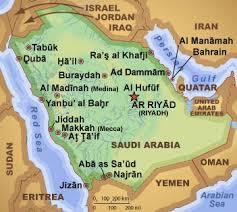
Maps of Saudi Arabia
We'll continue on this topic in the next entry. Till next time guys. :)
xoxo
let us start with the history of Saudi Arabia.
Saudi Arabs grew out of the larger group of nomadic inhabitants of the Arabian peninsula, who were known as “Arab.” The prophet Muhammad briefly unified the Arabs of the Arabian peninsula at the beginning of the Islamic religion in the 7th Century, but this unity was short-lived as the newly established Arab empire migrated north into Iraq, where the Abbasid Caliphate was established. The term “Arab” is now largely a cultural/linguistic designation, embracing various national, regional, and religious groups in several different countries.
The inhabitants of the Arabian Peninsula lacked a common cultural and ethnic identity until the 18th Century when Abd al-Wahhab and Muhammad Ibn Saud sought to unify the peninsula based on their shared religious-political philosophy. Al-Wahhab was a religious scholar who objected to what he called deviations from strict Islamic teachings and practices. Al-Wahhab advocated a return to the original Islam as practiced at the time of the prophet Muhammad in the 7th Century. Al-Wahhab reinforced the notion that the Saudi Arab identity is closely tied to the early events of Islam, which occurred on Saudi territory in the Hijaz in the 8th Century A.D.
FACTS AND STATISTICS OF SAUDI ARABIA
Official name: Al-Mamlakah al-ʿArabiyyah al-Suʿūdiyyah (Kingdom of Saudi Arabia)
Form of government: Monarchy
Head of state and government: King: Salman bin Abdulaziz Al Saud
Capital: Riyadh
Official language: Arabic
Official religion: Islam
Monetary unit: Saudi riyal (SR)
Population: (2014 est.) 30,955,000
Total area (sq mi): 830,000
Total area (sq km): 2,149,690
Urban-rural population Urban: (2012) 82.5%
Rural: (2012) 17.5%
Life expectancy at birth: Male- (2011) 73 years
Female- (2011) 75.2 years
Literacy (percentage of population age 15 and over literate): Male- (2008) 89.5%
Female- (2008) 80.2%
GNI per capita (U.S.$): (2013) 26,200

King Salman bin Abdulaziz acceded to the throne after the death of King Abdullah on January 23, 2015. He was designated Crown Prince, and appointed Deputy Prime Minister, by Custodian of the Two Holy Mosques King Abdullah bin Abdulaziz on June 18, 2012, upon the death of Crown Prince Nayef bin Abdulaziz. As Crown Prince, King Salman also serves as Minister of Defense.
King Salman was born in Riyadh on Dec. 31, 1935, and received his education at the Prince’s School in Riyadh. He served as Deputy Governor of Riyadh from March 1954 to April 1955, and Governor of Riyadh from April 1955 to December 1960 and again from February 1963 to Nov. 5, 2011, when he was appointed Minister of Defense.
Since 1956, King Salman has chaired various humanitarian and service committees that provide relief from natural and man-made disasters. For his humanitarian services, he has been awarded many medals and decorations, including awards from Bahrain, Bosnia and Herzegovina, France, Morocco, Palestine, the Philippines, Senegal, the United Nations, Yemen, and the King Abdulaziz Medal - First Class.
He is a recipient of several honorary degrees and academic awards, including an honorary doctorate from the Islamic University of Madinah, the King Salman academic award, and the Kant Medal by the Berlin-Brandenburg Academy of Sciences and Humanities in appreciation of his contributions to the field of science.
Maps of Saudi Arabia
We'll continue on this topic in the next entry. Till next time guys. :)
xoxo
Wednesday, March 2, 2016
Get to know others.
Assalamualaikum people. hyeee.. :)
We're sorry for the late of posting information on this blog. busy girls, you know.. hehe :P
so before we start on posting about what we need to share with u guys, let us see these flags first.
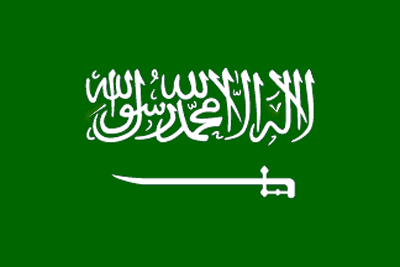
 any of u know about this flag? yes? no? who mentioned Saudi? YES!! this is Saudi Arabia's flag. so clever ;)
 hikss
Description on Saudi's flag :
The flag of Saudi Arabia was officially adopted in 1973.
Saudi Arabia's flag uses green to honor the country's puritanical Muslim Wahabi sect, and also because green is widely believed to be the prophet Muhammad's favorite color. The white, centered script, the shahada, is the Muslim Statement of Faith, "There is no God but God, and Muhammad is the Messenger of God". The sword represents Abd-al-Aziz.
(taken from http://www.worldatlas.com/webimage/flags/countrys/mideast/saudiarb.htm )
We have three topics which are Saudi Arabia country as out main topic, Myanmar as topic under race and the third is Baba Nyonya ethnic. So now we know about the flag of Saudi Arabia country. Let us see the second flag.
Any idea which flag is this? this flag belongs to Myanmar or also known as Burma.
Myanmar Flag - Introduction Myanmar flag has three equal horizontal stripes of yellow (top), green, and red; centered on the green band is a large white five-pointed star that partially overlaps onto the adjacent colored stripes; the design revives the triband colors used by Burma from 1943-45, during the Japanese occupation.
The history on this flag: Republic of the Union of Myanmar officially unveiled the current flag at 3pm on 21 October 2010 to replace the former flag in use since 1974. (The old flag, introduced by the socialist government of Ne Win in 1974, has a red field with a blue rectangle in the left corner bearing a cog wheel and a rice plant encircled by 14 stars representing the country's seven regions and seven states).

The old flags were lowered by government officials who were born on a Tuesday, while the new flags were raised by officials born on a Wednesday. The date and peculiar timing suggested the influence numerology. The date was 21 -- 2 plus 1 equals 3 -- the time was 3:00 and the year was 2010, whose digits add up to three. Added together they equal nine, an auspicious number in Myanmar. (In the 1980s, the nation had bank notes in denominations of 45 and 90 kyats, because each of those two numbers add up to nine!) The new flag was introduced as part of the changes to national symbols that were laid out in the 2008 Constitution pushed by the military junta.
(taken from http://myanmarflag.facts.co/myanmarflagof/myanmarflag.php )
Long history aitee :)
So next let us see the next topic which is about Baba Nyonya community or known as 'Peranakans'. But for this third topic wont have any specific flag, as they are one of the race that may stay in Singapore, Indonesia and Malaysia, specifically in Melaka and Penang.

(the photo of Baba Nyonya woman)
So that's all for all guys. See u in our next post. bubyee... :)
Description on Saudi's flag :
The flag of Saudi Arabia was officially adopted in 1973.
Saudi Arabia's flag uses green to honor the country's puritanical Muslim Wahabi sect, and also because green is widely believed to be the prophet Muhammad's favorite color. The white, centered script, the shahada, is the Muslim Statement of Faith, "There is no God but God, and Muhammad is the Messenger of God". The sword represents Abd-al-Aziz.
(taken from http://www.worldatlas.com/webimage/flags/countrys/mideast/saudiarb.htm )
We have three topics which are Saudi Arabia country as out main topic, Myanmar as topic under race and the third is Baba Nyonya ethnic. So now we know about the flag of Saudi Arabia country. Let us see the second flag.

Any idea which flag is this? this flag belongs to Myanmar or also known as Burma.
Myanmar Flag - Introduction Myanmar flag has three equal horizontal stripes of yellow (top), green, and red; centered on the green band is a large white five-pointed star that partially overlaps onto the adjacent colored stripes; the design revives the triband colors used by Burma from 1943-45, during the Japanese occupation.
The history on this flag: Republic of the Union of Myanmar officially unveiled the current flag at 3pm on 21 October 2010 to replace the former flag in use since 1974. (The old flag, introduced by the socialist government of Ne Win in 1974, has a red field with a blue rectangle in the left corner bearing a cog wheel and a rice plant encircled by 14 stars representing the country's seven regions and seven states).

The old flags were lowered by government officials who were born on a Tuesday, while the new flags were raised by officials born on a Wednesday. The date and peculiar timing suggested the influence numerology. The date was 21 -- 2 plus 1 equals 3 -- the time was 3:00 and the year was 2010, whose digits add up to three. Added together they equal nine, an auspicious number in Myanmar. (In the 1980s, the nation had bank notes in denominations of 45 and 90 kyats, because each of those two numbers add up to nine!) The new flag was introduced as part of the changes to national symbols that were laid out in the 2008 Constitution pushed by the military junta.
(taken from http://myanmarflag.facts.co/myanmarflagof/myanmarflag.php )
Long history aitee :)
So next let us see the next topic which is about Baba Nyonya community or known as 'Peranakans'. But for this third topic wont have any specific flag, as they are one of the race that may stay in Singapore, Indonesia and Malaysia, specifically in Melaka and Penang.
(the photo of Baba Nyonya woman)
So that's all for all guys. See u in our next post. bubyee... :)
Subscribe to:
Posts (Atom)


